August 13, 2026
Home improvement projects inspire property owners to take maintenance tasks into their own hands. Landscaping chores like mowing lawns, planting shrubs, and trimming hedges present manageable challenges for casual weekend enthusiasts. However, clearing large, mature timber from a residential parcel introduces extreme complexity that surpasses typical do-it-yourself capabilities. Property owners who attempt such hazardous work without proper qualifications risk severe damage and catastrophic complications.
Felling large timber involves physics, structural engineering principles, and unpredictable natural elements. Without professional intervention, an amateur can misjudge the weight, lean, or internal decay of a large trunk. Professional tree removal services provide the safety protocols, technical knowledge, and operational foresight required to handle these dangerous operations. Delegating this intense labor to established arborists protects people, property, and surrounding infrastructure from preventable disasters.
Protecting Property Against Structural Damage
Mature trees weigh massive tonnage and grow with uneven limb distribution that alters their center of gravity. When an inexperienced individual makes a cut, the trunk does not fall in a predicted straight line. Wind gusts, hollow cores, and interlocking canopy branches can force falling wood to twist or kick backward. Such unpredictable movement can send massive trunks crashing into residential roofs, garages, and decorative fences.
Underground root systems and aerial utility lines present additional obstacles during timber extraction. Roots wrap around sewer pipes and foundation walls, causing upheaval when trunks are wrenched from the earth. Above ground, falling limbs can sever high-voltage power cables, disrupting service to entire neighborhoods and causing structural fires. Professionals know how to inspect work zones to avoid striking these critical utility networks.
Arborists employ sophisticated rigging systems to lower heavy limbs in a controlled manner. Instead of allowing branches to drop onto landscaping, trained climbers secure sections with high-tensile ropes, pulleys, and friction devices. This systematic approach ensures the cut wood descends to a designated drop zone. Strategic tree removal preserves delicate gardens, patios, and hardscaping features located beneath the canopy.
Accidental property destruction caused by amateur felling attempts can lead to astronomical repair bills. Typical homeowner liability policies deny coverage for damages resulting from unlicensed, reckless do-it-yourself activities. Contracting insured professionals transfers financial liability away from the property owner and onto the commercial service provider. This financial buffer guarantees that any incidental property damage receives full compensation without depleting personal savings accounts.
Guarding Individuals Against Physical Injury
Arboriculture ranks among the most hazardous professions on the globe. Operating chainsaws while perched at high elevations creates an immediate environment of peril for workers without extensive safety training. Residential tree removal exposes laborers to lacerations, falls, and crushing impacts from swinging timber. Untrained property owners lack the reflexes and balance required to operate cutting tools while suspended in a canopy.
Wood under tension poses a silent, lethal hazard to amateur cutters. When a fallen trunk rests on uneven ground, internal branches bend and store immense kinetic energy. Cutting into a tensioned branch can cause the wood to snap like a giant spring, striking the operator with bone-shattering force. Professional arborists understand how to read wood tension and make relief cuts that neutralize spring poles without incident.
Dead branches, commonly known as widow-makers, dislodge without warning due to vibrations caused by chainsaw engines. These decaying limbs fall without noise from the upper canopy, presenting a fatal risk to workers standing unprotected on the ground below. Established arborists establish exclusion zones around the base of the trunk to keep bystanders and ground workers out of the danger trajectory.
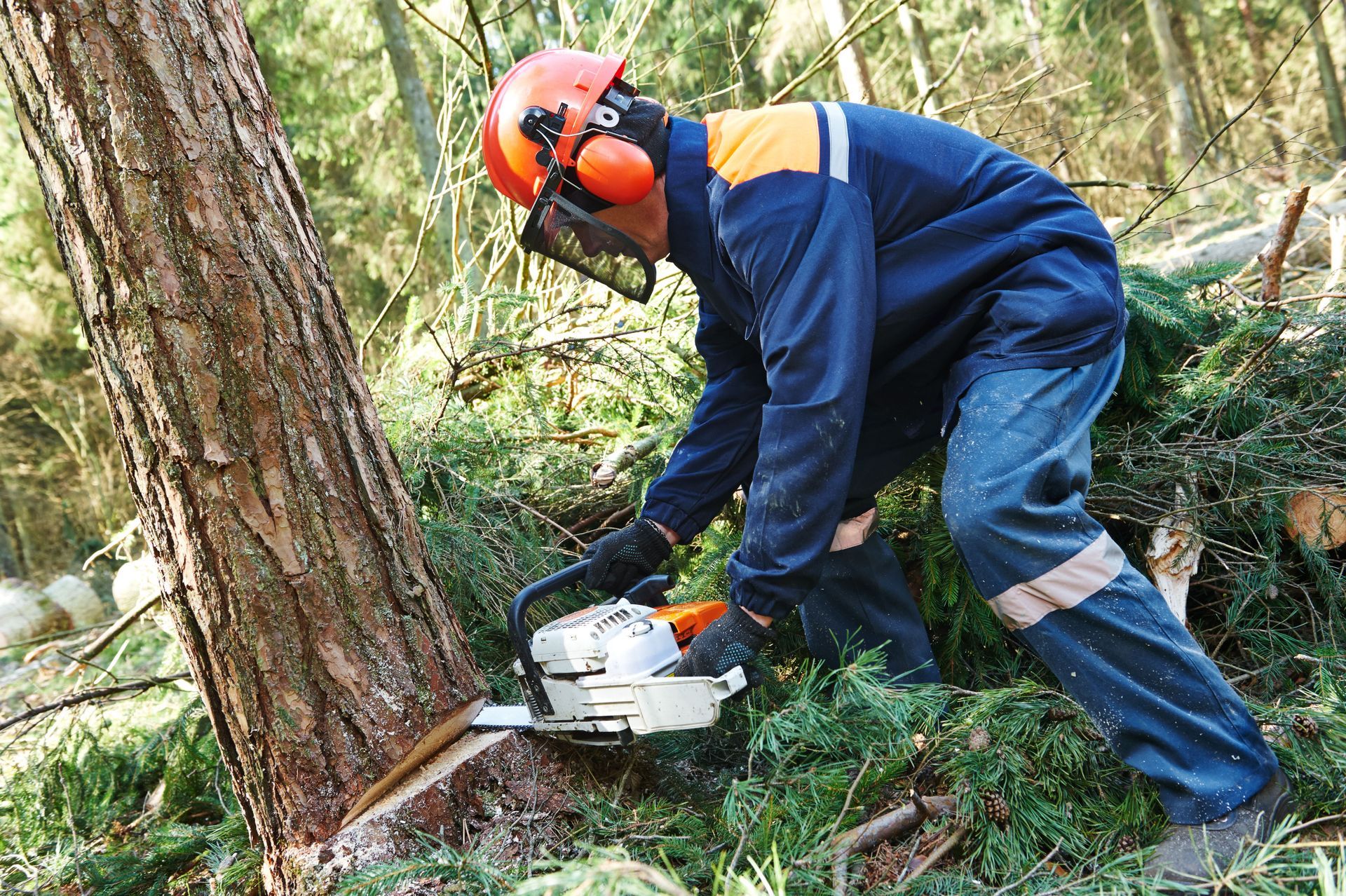
Comprehensive personal protective equipment separates professional arborists from casual weekend hobbyists. Experts wear cut-resistant chainsaw chaps, heavy-duty helmets with built-in face shields, hearing protection, and specialized rigging harnesses. This safety gear absorbs impacts, prevents accidental cuts, and secures climbers to anchor points. Casual property owners lack this specialized equipment, leaving their bodies exposed to severe trauma during felling operations.
Utilizing Machinery for Technical Precision
Consumer chainsaws purchased from retail hardware stores lack the torque and bar length needed for large-scale timber extraction. Professional crews arrive with commercial-grade saws designed to slice through thick hardwood trunks without binding or overheating. In addition to chainsaws, contractors utilize specialized heavy machinery that no standard residential garage can accommodate. Access to industrial gear transforms an arduous ordeal into a streamlined task.
Large-scale projects require bucket trucks, cranes, and high-capacity wood chippers. Cranes lift severed canopy sections over rooftops and fences, eliminating the need to drop wood onto the ground. When the timber reaches the staging area, industrial chippers reduce massive branches to mulch in moments. Executing comprehensive tree removal without these mechanical assets demands immense physical exertion and creates massive debris piles.
The arboriculture industry maintains a vast footprint across North America to meet growing property maintenance demands. According to IBISWorld, there are 19,929 businesses in the United States tree-trimming industry as of 2026. This widespread availability of commercial contractors means property owners have access to qualified crews equipped with specialized machinery. Leveraging this extensive commercial infrastructure eliminates the need for property owners to rent or buy expensive tools.
Stump grinding represents another mechanical challenge that requires professional-grade hardware. Standard digging tools cannot eradicate deep underground root balls without causing extensive soil disturbance. Professionals operate heavy stump grinders with rotating carbide teeth that pulverize stumps below the soil grade. This underground grinding process allows homeowners to plant fresh grass or ornamental shrubs without obstruction from decaying underground wood.
Complying With Regulations Within Municipal Boundaries
Municipal governments enforce strict ordinances governing land clearing and timber extraction. Many townships require property owners to obtain official permits before cutting down mature trees that exceed established diameter thresholds. Unapproved felling can result in hefty administrative fines, legal penalties, and mandatory replanting orders. Arboricultural companies understand regional codes and handle the permit application process on behalf of their clients.
Environmental protection laws safeguard heritage timber and endangered wildlife habitats from unauthorized destruction. Certain species receive federal or state protection due to historical significance, ecological value, or erosion prevention properties. Professionals possess the botanical knowledge required to identify protected species and assess nesting habitats for protected birds. Partnering with legitimate contractors prevents property owners from violating federal wildlife conservation statutes.
Boundary line disputes erupt when trees grow near shared residential property lines. Cutting a trunk that belongs partially to a neighbor can lead to expensive civil lawsuits and permanent neighborhood friction. Licensed arborists conduct thorough boundary assessments and property surveys before initiating any cutting activities. Their objective evaluation ensures that all felling operations remain within legal property borders.
Homeowners associations impose additional restrictions on landscape alterations to preserve neighborhood aesthetics. These local boards enforce covenants that dictate which species can be cut and how long debris can remain on the curb. Professional tree removal contractors align their work schedules and cleanup protocols with strict neighborhood association rules. Full compliance protects residents from regulatory harassment and financial penalties.
Attempting to clear large timber without professional assistance introduces unnecessary structural hazards, bodily peril, and regulatory complications. The physics of falling wood, coupled with high-voltage utility lines and dangerous cutting machinery, makes amateur felling an unwise endeavor. Contracting professional tree removal experts secures property, prevents tragic medical emergencies, and guarantees compliance with municipal conservation codes.
Property ownership involves making sound decisions that enhance safety, preserve equity, and minimize legal liability. Delegating hazardous arboricultural tasks to equipped specialists represents the definitive choice for responsible property management. By stepping back and allowing experienced arborists to handle dangerous timber, individuals ensure their homes and landscapes remain pristine, secure, and protected. If you are ready to tackle your next tree removal project safely, contact our team at Castlewood Tree Service today for a free estimate. We have the equipment and expertise to protect your property and give you complete peace of mind.